
I'm Sorry For Bleeding
On guilt, people-pleasing, and letting the blood be seen.

You’ve learned to take pain on. To fold yourself so small you almost disappear. To take the discomfort into your own body so the other person won’t have to feel it. You tell yourself this is love. You tell yourself this is generosity. It is not. It is a trick you’ve taught yourself. A lie. And you are so good at it. You feel shame for your cut, the way it bleeds, how red the blood is. You say sorry. You say sorry to the one who made the cut. “I’m sorry for bleeding,” you’ll say. There are knives in your throat. “I’m so sorry.”

People-pleasing sounds harmless. Sweet, even. The kind of trait you might confess in a job interview to make yourself seem humble. But it’s not sweet. It’s exhausting. It’s the slow erosion of your own edges until you’re shaped entirely by other people’s weather. You learn to predict storms before they form, to carry an umbrella for rain that isn’t yours. And when the sun finally comes out, you hardly notice because you’re too busy scanning the horizon for the next cloud.
It probably started young. Maybe you were very well attuned, and you learned how to read a room before you learned the alphabet. Maybe you started memorizing the tilt of a parent’s head, or the tightening of their jaw. Maybe you became fluent in silence, categorizing it in your head as either safety or danger. This is how you kept the peace. Maybe you started to believe that peace and love are the same thing for a long time.
As you grow older, you carry this attunement into every room. With friends, lovers, maybe even strangers on the train. You try to make yourself palatable before anyone has the chance to find you difficult. Cushioning your sentences and letting out a small laugh so they know you’re not serious. And it works, for a while. People like you, but you start to notice how the version they like is not quite the one who lives inside your skin.
This is how you begin to vanish because you choose your words by the shape of the other person’s mouth. Tilting your voice so it won’t scrape against their mood and practicing smiling while you bleed.
Apology becomes its own language. Not just for mistakes, but for existing in a way that might require someone else to adjust. I’ve said I’m sorry for being tired, for being quiet, for being too loud, for needing to be touched, for needing to be left alone. At some point, “sorry” stopped meaning “I regret what I did” and started meaning “please don’t look at me like that.”
Somewhere along the line, I learned to see pain as an embarrassment. A mess I should clean up quietly and alone. If a part of me ached, the decent thing to do was to hide it. Put a towel over it. Bleed where no one could see. I used to think this made me good and soft and easy to love. But I see now it just made me shrink myself. I’ll sit across from someone I love and when I start to retreat inward. I won’t tell them something. Even though I know that I can, even though I know it will make me feel better. Muscle memory takes over and I disappear. I wonder. Am I still here? Am I still in the room with you?
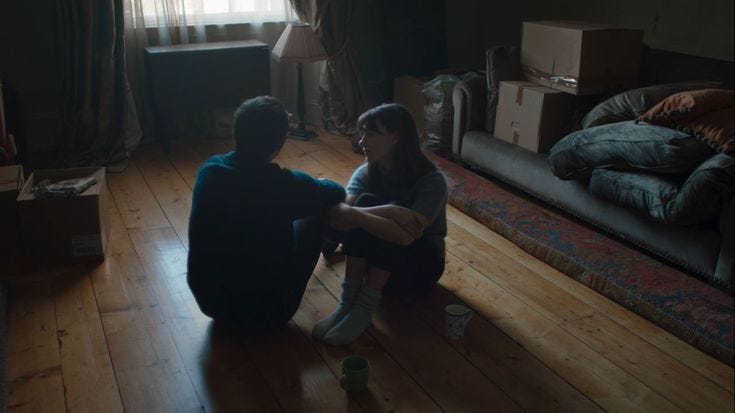
Sometimes I think I was born with an innate sense of guilt. Guilt is such a strange thing. It feels heavier than shame, but quieter too. Shame feels like exposure, like someone has turned a light on you and is seeing parts of you that you didn’t want to have lit. But guilt is private; it sits in the dark with you. It asks questions you can’t answer like ‘was I too much?’ and ‘am I right to be upset?’. Even when there is no crime, no victim, it finds a way to cast you as the one at fault.
And the strange thing is, when you spend years saying sorry for bleeding, you start to believe you shouldn’t bleed at all. That you should have found a way to keep the skin unbroken, the blood inside. That your body’s response to harm is somehow an offense. I have caught myself, one too many times, bothered by my own bother. Wondering why I can’t just let things go. Why am I letting something get to me.
It’s easy to think this habit makes life smoother. I would pride myself on never having confrontations. If I would tell anyone about a fight I had with someone, people would be genuinely confused how I even got in a fight. This used to make me smile. Yes, there are fewer arguments, fewer awkward silences. But it also means fewer truths. Fewer chances to be known past the version of you that’s been rounded off and made easy to hold.
I’ve noticed that when someone asks if I’m okay, my first instinct is to make them feel better for asking. To reassure them before I’ve even decided if the answer is yes or no. I don’t think it’s because I’m selfless. I think it’s because somewhere along the way, I learned that my discomfort is only acceptable if it disappears quickly.
And yet, the more you hide the bleeding, the more you start to believe your worth is tied to how little you need. That the best version of you is the one who can keep walking on a broken ankle, smiling like nothing hurts. You forget that love, the real kind, is not earned by disappearing but by showing yourself. Love is not feeding pieces of yourself to someone, hoping they don’t choke. Love is showing yourself and trusting the other person to hold you in a way that makes you feel good.
I don’t expect to unlearn this overnight. The instinct to hide runs deep, stitched into years of practice, and unlikely to disappear without putting up a fight. But I think about what it would feel like to stop apologising for the wound. To let it be seen without rushing to make it smaller, cleaner, easier to look at. Maybe it’s not about being unhurt, but about not disappearing when the hurt comes.
Maybe the next time I bleed, I will hold my hand over the wound and say nothing at all. Maybe, I will let the blood flow freely, let the red spill against my skin without trying to make it prettier. Next time. Maybe. I will not lower my eyes when they see it.
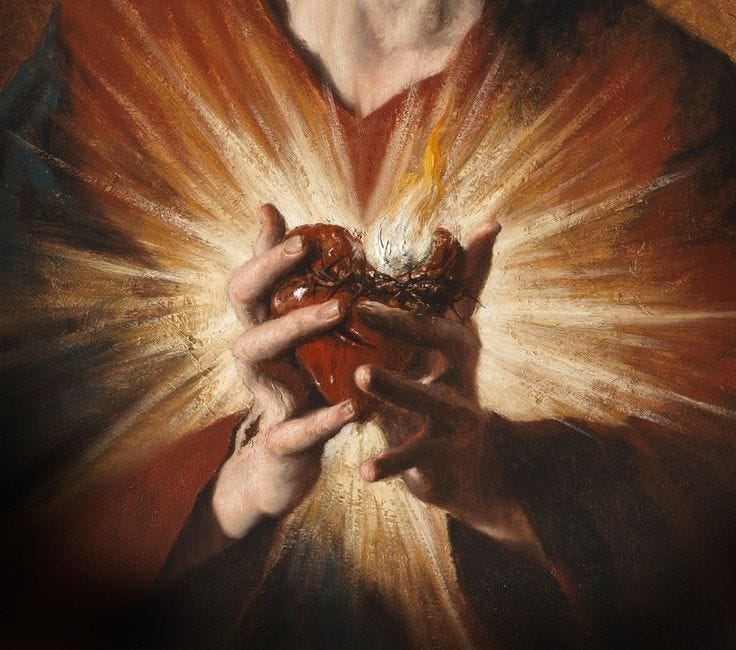
Unlearning people pleasing takes a lot of bravery, deep nervous system rewiring, healing old traumas and risking the loss of everyone who benefited from your lack of boundaries 🙃 But it’s a necessary step if you want to truly free yourself. 💙 I enjoyed reading this piece.
I personally am not much of a people pleaser, I'm happier to rub someone the wrong way than to stroke their ego.
Late last year and earlier this year I had a friend who was struggling a lot to break her newfound habit to give in to everyone, to say yes, and show up for everything and everyone else when she couldn't do it for herself. She was running herself into the dirt, lying and saying she was fine, apologizing for crying, feeling guilt she never should have felt.
In this conversation, towards the end I basically I told her that she was above the people around her, more capable, and I failed to understand why she was in the position she was in given who she is. The part I want to leave you with though and I told her was "stop being digestible, if you're hard to swallow then let them choke".
The people meant to be in your life and part of you will come and go and love will find its way to you in all forms.
I hope to talk more soon 🖤